
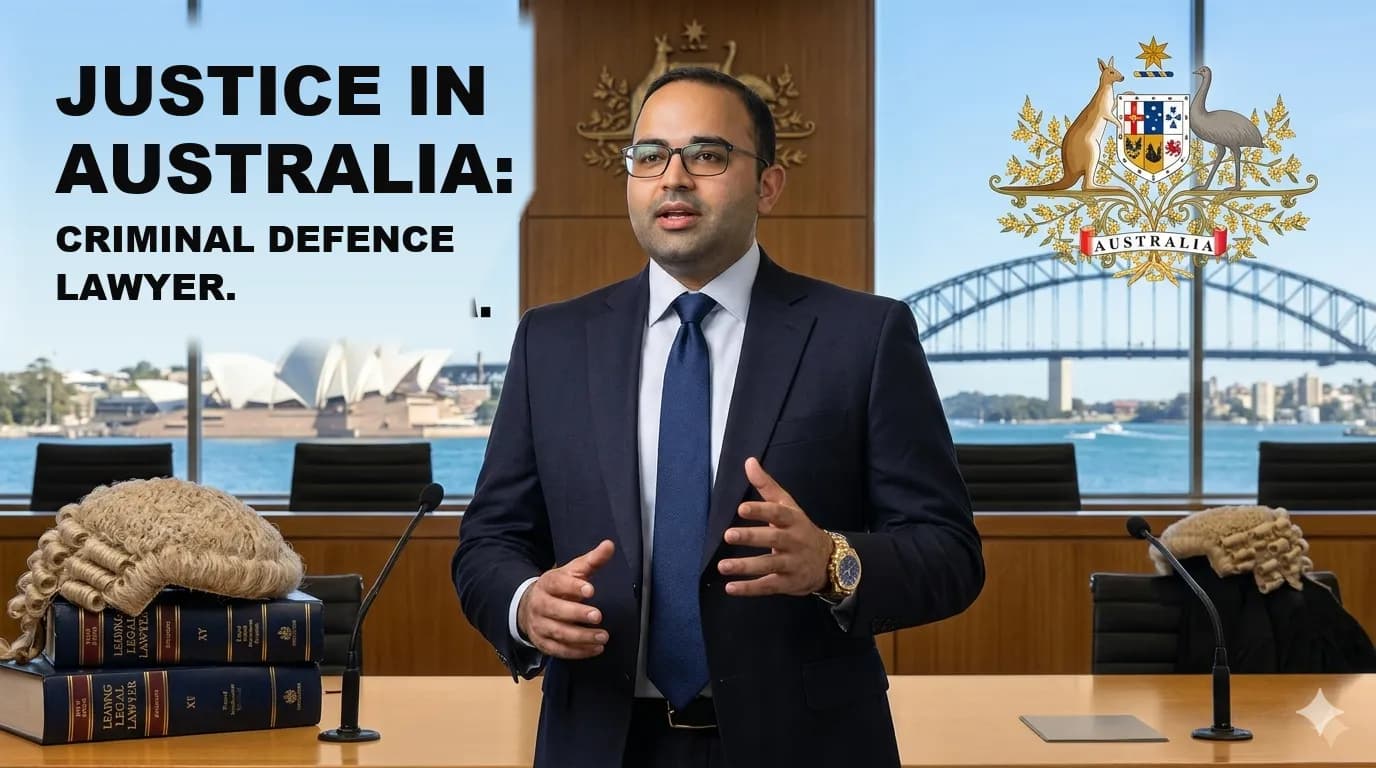
AVO Lawyers Sydney
If you've been served with an Apprehended Violence Order in Sydney, we can help you understand your options and respond appropriately - whether that means negotiating conditions, consenting without admissions, or defending the application at a hearing. We are available 24/7 from our Barangaroo and Parramatta offices.
AVO Matters We Handle
An Apprehended Violence Order (AVO) is a Court order under the Crimes (Domestic and Personal Violence) Act 2007 (NSW) designed to protect a person from violence, threats, harassment or intimidation. While an AVO itself is a civil order rather than a criminal charge, it can significantly affect where you can live, your contact with children, your employment, and your right to hold a firearms licence.
There are two types: an Apprehended Domestic Violence Order (ADVO), made where the parties are or have been in a domestic relationship, and an Apprehended Personal Violence Order (APVO), made where they are not - for example, disputes between neighbours or co-workers. APVO matters often involve mandatory mediation before a hearing.
Defending an AVO Application
When you're served with an AVO application, you generally have three options, and it's important to get advice before choosing between them:
- Consent without admissions - agreeing to the AVO being made without admitting to the allegations, often to avoid the stress and expense of a hearing where the conditions are manageable.
- Negotiate conditions - we can negotiate with police or the private applicant to remove or amend overly restrictive conditions, such as allowing contact for child arrangements, in exchange for consenting without admissions.
- Defend the application - if you dispute the allegations, the matter proceeds to a defended hearing where evidence is presented and a Local Court Judge decides whether the order is necessary on the balance of probabilities.
AVO Breach Charges
Breaching any condition of an active AVO is a serious criminal offence, carrying a maximum penalty of 2 years imprisonment and/or a fine of 50 penalty units. To secure a conviction, the prosecution must prove beyond reasonable doubt that a valid AVO was in force, that you were served with or aware of it, and that you knowingly contravened a condition.
If the breach involves an act of violence against the protected person, the legislation requires the Court to consider a custodial sentence unless there are exceptional circumstances.
Varying or Revoking an AVO
After a final AVO has been made, either the protected person or the defendant can apply to the Local Court to vary or revoke it if circumstances have genuinely changed. Applications from the protected person to relax conditions or revoke the order are generally given significant weight. Applications from the defendant require the Court to be satisfied that the change is proper, taking the protected person's safety into account. We can advise on whether an application is realistic in your circumstances.
AVO Conditions and Restrictions
Every AVO includes mandatory standard conditions preventing the defendant from assaulting, threatening, stalking, harassing or intimidating the protected person, or damaging their property. It's common for the conduct behind an AVO to also be charged separately as a criminal offence - see our intimidation and stalking page - so both matters often need to be handled together. Additional conditions can include:
- Residence: Exclusion from the family home.
- Non-contact: Prohibiting any form of contact.
- Non-association: Prohibiting approaching the person.
- Location: Banned from specific areas or workplaces.
- Intoxicants: Banned from alcohol/drugs around them.
- Firearms: Automatic suspension of firearms licences.
Disclaimer: The information above is general in nature and reflects our understanding of the relevant NSW law. It is not legal advice - you should obtain legal advice about your specific circumstances.
Related Areas
- Domestic Violence Guides
- Domestic Violence
- Assault Charges
- Intimidation & Stalking
- Bail Applications
- Section 14 Applications
- Criminal Appeals
Call Us 24/7
For AVO matters.
Our criminal defence practice is led by Muhammad Siddique, Senior Associate Criminal Lawyer.
0414 444 474Why Choose NS Criminal Lawyers & Associates
Focused AVO Experience
Led by Muhammad Siddique, Senior Associate Criminal Lawyer (LLM), admitted to practise in the Supreme Court of New South Wales and the High Court of Australia.
24/7 Phone Advice
Just been served with an AVO? Call anytime - phone advice is available 24/7.
Two Sydney Offices
With offices in Barangaroo and Parramatta, we're positioned to represent clients across the Sydney CBD, inner city and Western Sydney courts.
Courts We Appear In
AVO applications and hearings are dealt with in the Local Court, so with rare exceptions your matter will be heard at the Local Court nearest to where the application was made. Breach charges are also generally dealt with in the Local Court. We regularly appear at Local Courts across Sydney on AVO matters.
Fees
Phone advice is available 24/7, so you can get guidance immediately after being served with an AVO.
Where an in-person consultation is needed, this is a paid service. Contact us for current consultation rates.
Frequently Asked Questions
Contact Us
Fill out the form and we'll get back to you shortly, or call us 24/7.
Phone
0414 444 474Hours
Phone line open 24/7.
Standard office hours: Mon - Sat, 8:00am - 6:00pm.
Barangaroo Office
Level 35, Tower One Barangaroo
International Towers, 100 Barangaroo Ave
Barangaroo NSW 2000
Parramatta Office
Level 14, 3 Parramatta Square
153 Macquarie Street
Parramatta NSW 2150
Author: NS Criminal Lawyers & Associates | Reviewed by: NS Criminal Lawyers & Associates | Jurisdiction: New South Wales
The information on this website is general information only and is not legal advice. You should obtain legal advice about your specific circumstances.