
What Is Affray in NSW? Meaning, Penalties and Defences
- NS Criminal Lawyers & Associates
- Published 7 Oct 2026
- Criminal Law
- 12 min read
A night out, a heated argument and a few seconds of pushing and shouting can be enough for police to lay an affray charge. Affray is one of the most common public order offences prosecuted in New South Wales, and many people are surprised to learn that it carries a maximum penalty of 10 years in prison, even when nobody is hurt.
This guide explains the affray meaning under NSW law in plain English, what police have to prove, the penalties courts work with, the defences that may be available and what to do if you have been charged with affray.
Quick answer: what is affray?
Affray is an offence under section 93C of the Crimes Act 1900 (NSW). A person commits affray if they use or threaten unlawful violence towards another person and their conduct would make a person of reasonable firmness present at the scene fear for their personal safety. The maximum penalty is 10 years in prison, but most affray charges are finalised in the Local Court, where the maximum is 2 years in prison and/or a fine of $11,000.

What Is Affray? The Legal Meaning of Affray in NSW
The offence of affray is set out in section 93C of the Crimes Act 1900 (NSW). Subsection (1) says:
"A person who uses or threatens unlawful violence towards another and whose conduct is such as would cause a person of reasonable firmness present at the scene to fear for his or her personal safety is guilty of affray and liable to imprisonment for 10 years."
In simple terms, the affray meaning comes down to two ideas: someone used or threatened violence, and it was serious enough that an ordinary, reasonably brave person standing nearby would have feared for their own safety.
The law looks at the scene as a whole. That is why affray is often charged after brawls outside pubs, fights at parties or confrontations in the street, even where it is hard to say exactly who hit whom. The rest of section 93C adds four important rules:
- If two or more people use or threaten violence, their conduct is considered together (section 93C(2)).
- A threat cannot be made by words alone (section 93C(3)). Shouting abuse, without more, is not affray.
- No bystander actually has to be present, or even likely to be present (section 93C(4)). The "person of reasonable firmness" is a hypothetical person the court imagines.
- Affray can be committed in private places, such as inside a home, as well as in public places (section 93C(5)).
Section 93A of the Crimes Act defines "violence" broadly. It includes conduct that does not injure anyone, such as throwing something at a person that misses. For affray, however, the violence must be towards a person. Damaging property on its own is not affray, although it may be a different offence such as malicious damage.
What Police Must Prove: The Elements of Affray
To convict you of affray, the prosecution must prove each of these elements beyond reasonable doubt:
- You used or threatened unlawful violence. The violence or threat must be unlawful, which is why self-defence is so important (see the defences section below).
- The violence or threat was directed towards another person. Violence aimed only at property is not enough.
- Your conduct would cause a person of reasonable firmness present at the scene to fear for their personal safety. This is an objective test. The court asks how a hypothetical, reasonably firm bystander would have felt, not how the people who were actually there felt.
- You had the required state of mind. Under section 93D(2), you must have intended to use or threaten violence, or been aware that your conduct may be violent or threaten violence.
Police commonly rely on CCTV, mobile phone footage, body worn camera footage and witness statements to try to prove these elements. Because footage is often unclear and witnesses often disagree, the evidence behind many affray charges NSW police lay is open to challenge. If you are facing an affray charge in NSW, your lawyer will test every one of these elements.
Common Examples of Affray
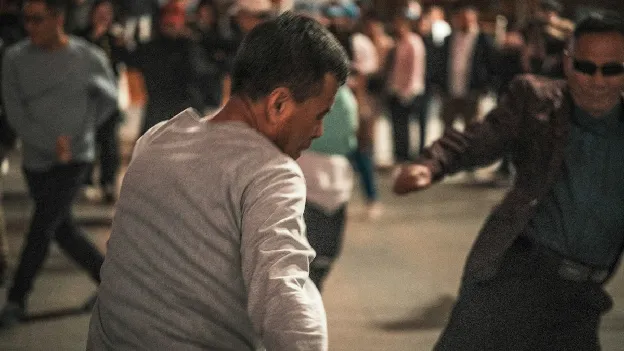
Every case turns on its own facts, but affray charges in NSW often arise from situations like these:
- A brawl between groups outside a pub, club or late night food outlet
- A fight at a party, wedding or sporting event that other people are caught up in
- Road rage where a driver gets out of the car and threatens another person, especially with an object such as a bat or steering lock
- A confrontation on public transport or at a train station
- A violent argument inside a home while other people are present
Simply being near a fight is not enough. The prosecution has to prove that you personally used or threatened unlawful violence. Standing back, filming on your phone or trying to break up a fight is very different from joining in, and that difference is often at the heart of a defence.
Affray vs Assault: What Is the Difference?
People often confuse affray with assault. The two offences overlap and police sometimes lay both charges, but they protect different things. Assault is about the force or fear caused to a particular victim. Affray is about the threat to public order and to anyone who might be at the scene. The table below compares affray with assault and the two other main public order offences.
| Offence | Law | Number of people | Key test | Maximum penalty |
|---|---|---|---|---|
| Affray | Crimes Act 1900, s 93C | One or more | Would a person of reasonable firmness at the scene fear for their personal safety? | 10 years (2 years in the Local Court) |
| Common assault | Crimes Act 1900, s 61 | One or more | Force applied to a person without consent, or a person made to fear immediate unlawful force | 2 years |
| Riot | Crimes Act 1900, s 93B | 12 or more, with a common purpose | Same "reasonable firmness" test, plus a common purpose | 15 years |
| Violent disorder | Summary Offences Act 1988, s 11A | 3 or more | Same "reasonable firmness" test | 6 months or 10 penalty units ($1,100) |
If you are also facing an assault charge, read our guide to common assault charges in NSW or speak with our assault lawyers in Sydney. For riot and violent disorder, see our page on public order offences.
Penalties for Affray in NSW
The maximum sentence for affray is 10 years imprisonment. Parliament doubled it from 5 to 10 years in December 2005 through the Law Enforcement Legislation Amendment (Public Safety) Act 2005, which was passed in response to the Cronulla riots. In practice, the full maximum is reserved for the most serious cases.
Local Court or District Court?
Affray is a "Table 1" offence under Schedule 1 of the Criminal Procedure Act 1986 (NSW). That means it is dealt with in the Local Court unless the prosecution or the accused person elects to have it dealt with in the District Court. Most affray cases stay in the Local Court, where the maximum penalty is 2 years in prison and/or a fine of 100 penalty units, which is currently $11,000 (one penalty unit is $110). You can see these limits in the Judicial Commission of NSW Local Court Bench Book.
More serious matters, for example where a weapon was used, someone was badly hurt or the affray was part of a group attack, can be dealt with in the District Court, where the full 10 year maximum applies.
Sentencing Options and the Affray Penalty NSW Courts Can Impose
When sentencing for affray, a court can choose from a range of options under the Crimes (Sentencing Procedure) Act 1999 (NSW). Roughly from least to most serious, they include:
- Section 10(1)(a) dismissal: the charge is proven but dismissed, with no conviction recorded
- Section 10(1)(b) conditional release order without conviction: you must be of good behaviour for a set period, and no conviction is recorded
- Conviction with no other penalty (section 10A)
- Conditional release order with a conviction (section 9)
- A fine
- Community correction order (section 8), which can include community service work and supervision
- Intensive correction order (section 7), which is a prison sentence served in the community
- Full time imprisonment
Avoiding a conviction is possible in the right case. In R v Goh [2002] NSWCCA 234, decided when the maximum penalty was 5 years, the Court of Criminal Appeal declined to interfere with a section 10 order for an affray at the bottom of the scale of seriousness, although it noted that such orders are not common for serious offences. Every case depends on its own facts. Read more about section 10 non-conviction orders and sentencing and penalties in NSW.
The penalty in any particular case depends on factors such as:
- Whether a weapon was used or carried
- Whether anyone was injured, and how badly
- How many people were involved and your role in the incident
- Your criminal record, or lack of one
- Whether you pleaded guilty early, which can reduce the sentence
- Your remorse, any steps you have taken to address the causes of the offending, and your character references
Being drunk or affected by drugs is not an excuse. Under section 21A(5AA) of the Crimes (Sentencing Procedure) Act, self-induced intoxication is not a mitigating factor, so it will not reduce the penalty.
Will I Go to Jail for Affray?
Not necessarily. Prison is not automatic, and depending on the facts a court may impose a non-custodial sentence such as a conditional release order or a community correction order, or may not record a conviction at all. The risk of an affray jail sentence rises where the violence was serious, a weapon was involved, someone was injured or the person has a history of violent offending. The best way to reduce that risk is to get legal advice early and prepare properly for court.
Charged With Affray First Offence: What Can Help
If this is your first time in trouble with the law, the court will take your good character into account. Strong character references for court, a sincere letter of apology, evidence of counselling such as anger management or drug and alcohol programs, and genuine remorse can make a real difference. Together, these can support an application for a section 10 dismissal or a conditional release order without conviction.
Defences to an Affray Charge
Being charged is not the same as being guilty. Depending on the evidence, the following defences and arguments may be available. You can also read our wider guide to defences to criminal charges in NSW.
Self-defence
Under section 418 of the Crimes Act, you are not criminally responsible if you believed your conduct was necessary to defend yourself or another person, and your conduct was a reasonable response in the circumstances as you perceived them. Once self-defence is raised, the prosecution must prove beyond reasonable doubt that you were not acting in self-defence (section 419). The Judicial Commission's guide to self-defence explains how courts apply this test.
Self-defence has limits. In Doran v DPP; Brunton v DPP [2019] NSWSC 1191, the Supreme Court upheld affray convictions where the accused moved from defending themselves to chasing people who were retreating. Once defence turns into attack, the defence is unlikely to succeed.
Words alone, or no unlawful violence
Shouting, swearing or making verbal threats, without any physical act or threatening gesture, cannot amount to affray, because a threat cannot be made by words alone (section 93C(3)).
The "reasonable firmness" test is not met
If the conduct was minor or brief, or would not have made a reasonably firm person fear for their own safety, the offence is not made out.
No intention or awareness
You must have intended to use or threaten violence, or been aware that your conduct may be violent or threaten violence (section 93D). An accidental or reflexive movement may not meet this test.
Identification
In crowded, chaotic scenes, witnesses and footage often fail to clearly show who did what. If the prosecution cannot prove beyond reasonable doubt that you were the person involved, you are entitled to be found not guilty.
Duress and necessity
In rare cases, a person may have acted because of threats of death or serious harm (duress), or to avoid a greater harm (necessity).
What Happens After You Are Charged With Affray?
- Police investigation and interview. You generally have the right to remain silent, subject to limited exceptions, and it is usually wise to get legal advice before answering any questions. See our guide to police questioning rights in NSW.
- Charge and bail. You will receive a Court Attendance Notice, and police will decide whether to release you on bail. If bail is refused, a lawyer can make a bail application to the court.
- First court date. Your case will usually be listed at a local court, such as the Downing Centre Local Court or Parramatta Local Court.
- Evidence and negotiations. Your lawyer reviews the brief of evidence, including any CCTV. In many cases, a lawyer can write to police asking them to withdraw the charge or replace it with a less serious one.
- Plea, then a hearing or sentence. If you plead not guilty, the case goes to a defended hearing. If you plead guilty, the court will sentence you. Our guide on going to court in NSW explains what to expect on the day.
An affray conviction appears on your criminal record and can affect your job, travel plans and visa applications. That is why it matters to explore every option for avoiding a criminal record. Legal Aid NSW also has general information about the court process.
How Our Affray Lawyers Can Help
NS Criminal Lawyers & Associates focuses only on criminal and traffic law. Our affray lawyers in Sydney appear in Local Courts across Sydney and NSW and can help by:
- Reviewing CCTV, phone footage and witness statements for weaknesses
- Raising self-defence and other defences where they apply
- Negotiating with police to withdraw or downgrade the charge
- Preparing you for court, including character references and supporting material
- Making strong submissions for a section 10 or the lowest possible penalty

Charged with affray? Call 0414 444 474, available 24/7, or contact us online.
Frequently Asked Questions About Affray
What does affray mean in simple terms?
In simple terms, the affray meaning is using or threatening violence towards someone in a way that would make an ordinary, reasonably brave bystander fear for their own safety. It is often described as fighting, or threatening violence, in a way that frightens the public.
Is affray a serious offence in NSW?
Yes. Affray carries a maximum penalty of 10 years imprisonment, although most cases are finalised in the Local Court, where the maximum is 2 years imprisonment and/or an $11,000 fine.
Can you be charged with affray if nobody was injured?
Yes. No injury is needed. Threatening violence can be enough, as long as it goes beyond words alone and would make a person of reasonable firmness fear for their safety.
Can affray happen inside a private home?
Yes. Section 93C(5) of the Crimes Act says affray may be committed in private as well as in public places.
What is the difference between affray and riot?
Riot requires 12 or more people using or threatening unlawful violence for a common purpose, and carries up to 15 years imprisonment. Affray can be committed by just one person.
Will an affray charge go on my criminal record?
If you are convicted, yes. However, if the court makes a section 10 dismissal or a conditional release order without conviction, no conviction is recorded.
This article provides general information only and is not legal advice. The law referred to is current in New South Wales as at the date of publication. For advice about your circumstances, please contact a qualified criminal defence lawyer.
Part of our NSW Criminal Law Knowledge Centre: Charges
About NS Criminal Lawyers & Associates
Experienced criminal and traffic defence representation across Sydney and New South Wales. Protecting your rights with integrity and commitment, available 24/7.
- Barangaroo (Sydney CBD)Level 35, Tower One, 100 Barangaroo Ave, Barangaroo NSW 2000
- ParramattaLevel 14, 3 Parramatta Square, 153 Macquarie Street, Parramatta NSW 2150
Related Articles
- Knife Laws NSW 2026: Can You Carry a Knife in Public?14 Oct 2026
- Self Defence Laws NSW: When Is Using Force Legal?14 Oct 2026
- New Organised Crime Bill Would Expand Digital Evidence Access Orders1 Sept 2026
- Charged With Drug Possession in NSW? The Law Explained28 Aug 2026
- Sexual Touching Charges in NSW: The Law Explained25 Aug 2026
- Bail Pending Appeal in NSW: Do You Go to Custody While Your Appeal Is Heard?24 Aug 2026